ERP
The Best Finance Platforms Built for Schools (And What to Look For)
A practical breakdown of what separates a genuine school finance platform from a collection of spreadsheets, portals and point tools, so finance teams can evaluate options with confidence.
November 11, 2026
Quick Answer
The best finance platforms built for schools bring budgeting, fee billing and reporting together on one system connected to the school's existing accounting software, student records and payroll, rather than three separate tools that need reconciling by hand. Look for a platform that keeps the model and fee rules finance already relies on, so nothing is rebuilt from scratch, connects to the systems already in place, and produces Board ready reporting without a lengthy implementation. A platform that does all three from one model usually answers the rest of a shortlist on its own.
Key Takeaways
- A genuine school finance platform connects budgeting, fee billing and reporting, not just one of the three.
- The strongest options work with the accounting system, SIS and payroll a school already has, instead of replacing them.
- Implementation effort, not just feature count, is usually what decides whether a platform actually gets adopted.
The business manager has three browser tabs open. One is the budget workbook, built up over several years and trusted by everyone who has ever had to explain a number to the Board. One is the fee billing portal, where payment plans and sibling discounts are tracked separately from the budget. One is a reporting spreadsheet, rebuilt every month by pulling numbers out of the other two.
None of these tools is wrong on its own. The problem is that none of them talk to each other, so every change has to be made three times, and every reconciliation starts from a blank sheet.
What Is a School Finance Platform, Exactly?
A school finance platform is software designed to handle planning, budgeting, forecasting, fee billing and reporting for an education institution, usually built on or alongside an established accounting system such as Oracle NetSuite rather than replacing it outright. The category sits apart from generic small business accounting software and from corporate financial planning tools adapted for education, because it is built around the way schools actually work: enrolments, cohorts, year levels, fee categories, bursaries and Board reporting cycles.
That distinction matters more than it sounds. A platform designed for a corporate finance team will model cost centres and revenue lines. A platform designed for a school needs to model a Year 9 cohort, a boarding fee, a sibling discount and a Board paper due in the same week, because that is what a school's finance team is actually managing.
Why Do Schools End Up With Separate Systems?
Most schools do not set out to run three separate systems. The accounting system handles the general ledger. A spreadsheet handles budgeting and forecasting, because it is flexible enough to capture the assumptions finance has built up over years. A billing tool, or a manual process, handles fee collection, discounts and payment plans. Each piece works well enough on its own, which is exactly why it has stayed in place.
None of this reflects a lack of financial expertise. The friction only becomes visible when all three need to agree with each other, during budget season, at reforecast, or the week before a Board meeting.
What Should Budgeting and Forecasting Software Actually Do?
A finance platform's budgeting and forecasting capability should let finance build one model for the annual budget and reuse that same model at every reforecast. Change a salary or enrolment assumption once and see it flow through staffing costs, fee revenue and the operating result together, rather than rebuilding the calculation in a second workbook.
Contributors, such as Heads of Department, should be able to enter their own numbers directly, with the explanation attached, instead of returning a completed spreadsheet by email and leaving finance to work out what changed.
What Should Fee Billing and Collections Software Actually Do?
Fee billing software should apply fee categories, sibling discounts, bursaries and payment plans automatically at the point of invoicing, and keep that information connected to the same financial model used for budgeting. When a family's payment plan changes, or a scholarship is approved, the adjustment should be visible in both the billing record and the revenue forecast, not just one of them.
What to Look For in a School Finance Platform
Six areas tend to separate a genuine finance platform from a set of point tools stitched together with spreadsheets.
| Capability Area | What Good Looks Like | Why It Matters |
|---|---|---|
| Budgeting and forecasting | One model reused for the annual budget and every reforecast | Assumptions are changed once instead of rebuilt each cycle |
| Fee billing and collections | Fee categories, discounts and payment plans applied automatically | Removes manual reconciliation between billing and the budget |
| Reporting | Board ready reports pulled from the same model as the budget | Numbers match without a separate consolidation step |
| SIS and payroll integration | Enrolment and staffing data feed the model directly | Removes duplicate data entry across systems |
| Implementation effort | Existing workbooks and fee rules can be the starting point | A new platform should not mean starting from a blank page |
| Audit trail | Changes are tracked with the reason attached | Answers a Board question without reconstructing history |
How Important Is Integration With the Systems Already in Place?
Integration is usually the difference between a platform that gets adopted and one that quietly falls out of use. A finance platform connected to the school's student information system can pull enrolment numbers directly into the budget, so a change in expected cohort size updates fee revenue without finance re-entering it. The same applies to payroll, where staffing cost assumptions can be linked to the figures already used to pay staff.
A platform that requires manual exports between systems has simply moved the reconciliation problem rather than removed it.
How Much Implementation Effort Should You Expect?
This is usually the real test of whether a platform fits a school's existing process. Replacing the accounting system or rebuilding every budget model from a blank page is a significant undertaking, and it is reasonable for a school to resist that during budget season.
A platform built to work alongside the existing finance system, using current workbooks and fee rules as a starting point, asks for far less. The most useful question to ask a vendor is what the first three months would actually involve, not just what the product can eventually do.
Now Imagine Comparing a Shortlist Against One Model
Now imagine working through a shortlist with the criteria above written down in one place, rather than relying on a feature list from each vendor. PULSE, Feoda's planning, budgeting, forecasting and reporting platform built for schools, is designed around exactly this model.
It works alongside a school's existing finance system rather than replacing it, keeps the budget and fee billing connected through Tenor, Feoda's accounts receivable module, and reports from the same data, with both built on Oracle NetSuite. Existing workbooks can be the starting point, and the finance team stays in control of the numbers and the story behind them.
Comparing platforms is easier when effort and fit are treated as seriously as features.
Frequently Asked Questions
A school finance platform is software that manages budgeting, forecasting, fee billing and reporting for a school or university, usually built on or connected to an established accounting system rather than replacing it outright.
Related Articles
- ERPA Practical School Financial Reforecasting Method for Changes in Enrolment
- ERPHow to Calculate the Time and Cost of Manual School Fee Reconciliation
- ERPHow to Improve School Enrolment Forecasting: 5 Inputs Finance Teams Should Track
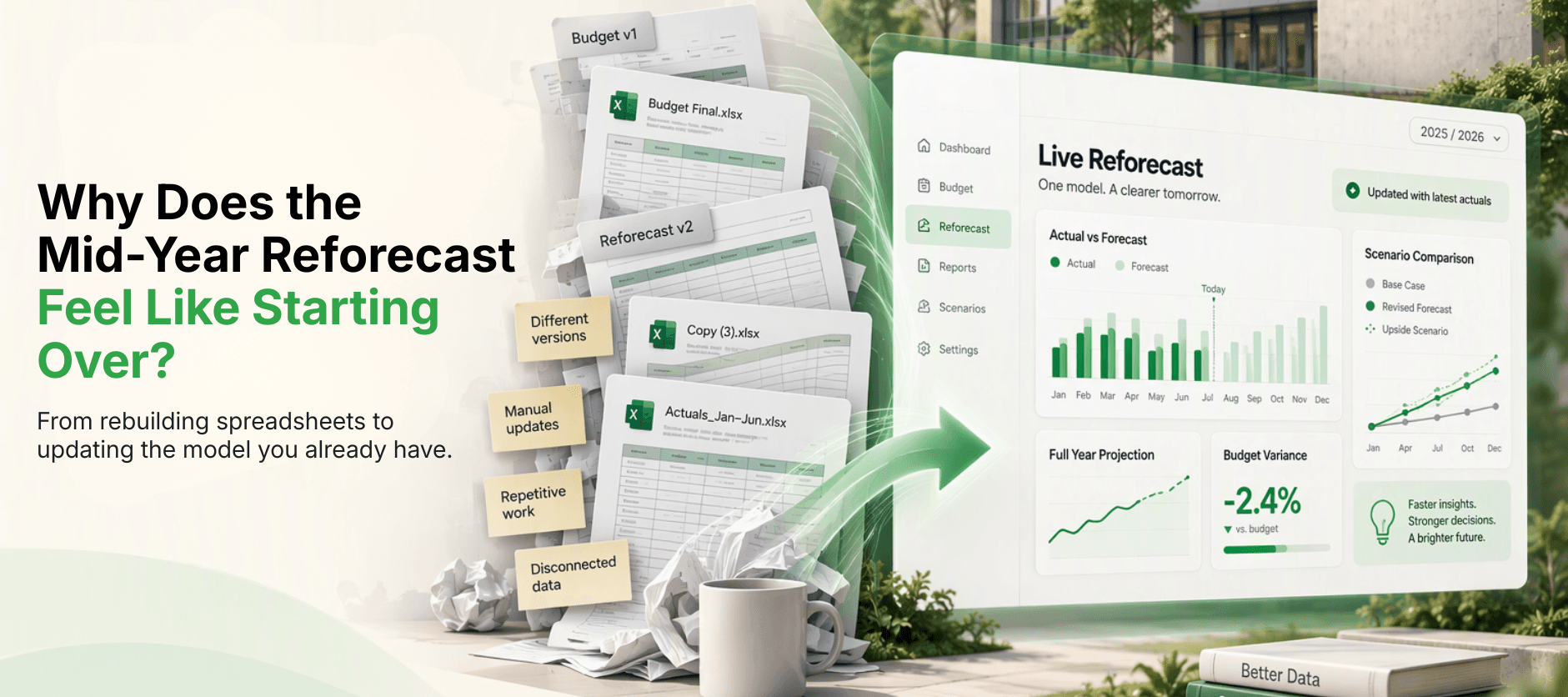
- ERPWhy Does the Mid-Year Reforecast Feel Like Starting the Budget Over Again?
- ERPWhat Does a School Board Actually Ask Before Approving Next Year's Budget?
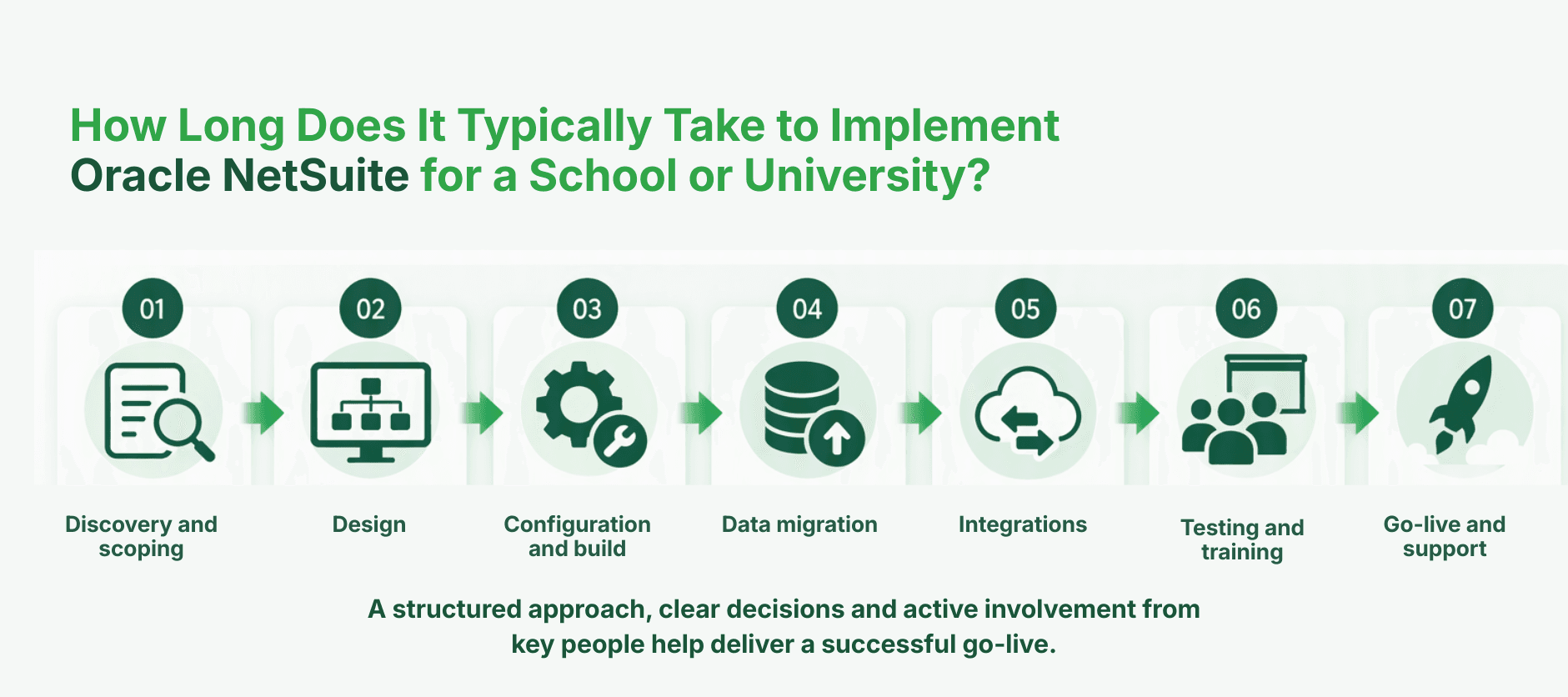
- ERPHow Long Does It Typically Take to Implement Oracle NetSuite for a School or University?
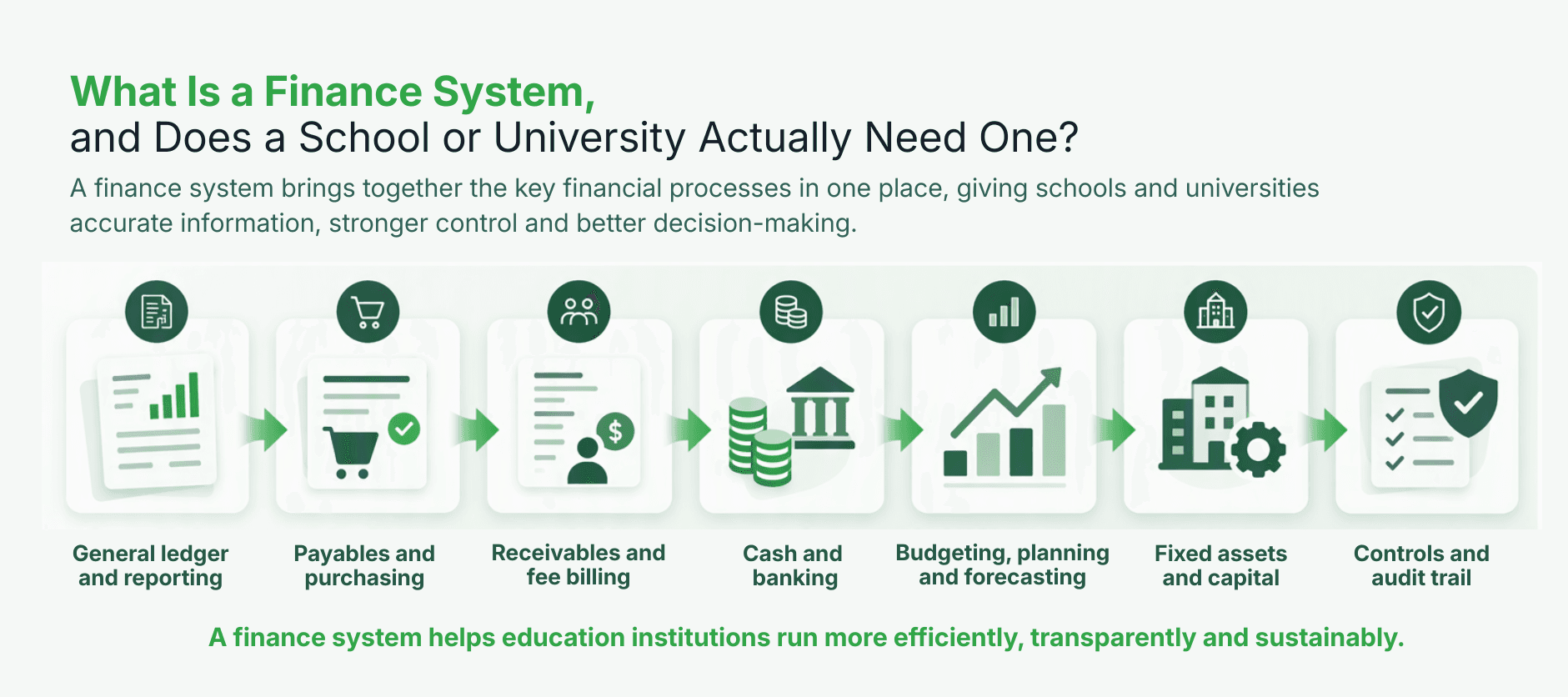
- ERPWhat Is a Finance System, and Does a School or University Actually Need One?
- EPMHow to Choose School Fee Billing Software: 9 Workflow Checks for Finance Teams