ERP
What Is a Finance System, and Does a School or University Actually Need One?
A plain explainer for CFOs and Finance Directors weighing up whether their institution has outgrown a basic accounting system.
October 23, 2026
Quick Answer
A finance system is the software a school or university uses to run its financial operations in one place: the general ledger, payables and receivables, purchasing, cash management, reporting and often budgeting and planning. A basic accounting system records transactions and produces core reports. A finance system does that and also connects the processes around it, such as approvals, fee billing, budgets, multiple campuses or funds, and Board reporting. Most institutions need one when the work of connecting separate tools by hand starts to take more time than the finance itself.
Key Takeaways
- A basic accounting system records what happened. A finance system also manages the processes around it, such as approvals, billing, budgets and reporting.
- The need for a finance system is rarely about size alone. It is about complexity: more funds, campuses, fee types, approvers and reporting demands.
- You don't have to replace everything at once. Keeping what already works is a reasonable starting point.
It's the week before the Board pack is due. The CFO has the accounting system open in one window, the fee billing export in another, the budget workbook in a third, and a procurement spreadsheet in a fourth. The numbers agree, eventually. Three people have spent two days making them agree.
Nothing here is broken. The accounting system has served the institution well for years, and the team knows it inside out. But the question keeps returning: is this simply how finance works in education, or has the institution outgrown the tools it started with? This guide is meant to help you answer it.
What Is a Finance System?
A finance system is the single environment where an institution's financial work happens, from the first purchase request to the final Board report. Instead of each task living in its own tool, the processes are connected, so a number entered once is available wherever it is needed. People sometimes call this category an ERP, short for enterprise resource planning, and for a school or university the finance system is usually the core of it.
The exact scope varies, but most finance systems cover these areas:
| Area | What It Does |
|---|---|
| General ledger and reporting | Holds the financial record and produces statements by campus, fund or department. |
| Payables and purchasing | Manages purchase requests, approvals, supplier invoices and payments. |
| Receivables and fee billing | Invoices families or students, tracks payments and manages overdue balances. |
| Cash and banking | Reconciles bank accounts and shows the cash position. |
| Budgeting, planning and forecasting | Holds the budget, reforecasts and scenarios, linked to actual results. |
| Fixed assets and capital | Tracks assets, depreciation and capital projects. |
| Controls and audit trail | Records approvals, permissions and who did what, and when. |
What Is the Difference Between an Accounting System and a Finance System?
A basic accounting system is designed to record transactions and produce the core financial reports, and it does that job well. A finance system builds on the same foundation and connects the processes around it. The difference shows up in the everyday questions:
| Question | Basic Accounting System | Finance System |
|---|---|---|
| What is it mainly for? | Recording transactions and producing core reports. | Running the whole financial process, from request to approval to payment to reporting. |
| How are approvals handled? | Often by email or on paper. | Built in, with rules and a record of each step. |
| How is fee billing handled? | Often in a separate system, linked by exports. | In the same system, or connected to it directly. |
| Where does the budget live? | Usually in separate workbooks. | Connected to actual results in the same environment. |
| How is reporting built? | Exports combined by hand. | Drawn from one source. |
| What happens as the institution grows? | Extra campuses, funds or entities often mean extra files. | Designed to handle many entities, campuses and funds together. |
Does Your School Need a Finance System?
Not always. A small school with one campus, simple fees and a stable team can run very well on a basic accounting system. The need for a finance system is about complexity rather than size, and it tends to appear gradually. These are the signs that the process around the accounting system is starting to strain:
- Month end depends on exports: closing the books means pulling data from several tools and reconciling them by hand.
- Approvals live in email: it takes effort to show who approved what, and when.
- Billing and the ledger need reconciling: fee invoices, receipts and the ledger don't agree without manual work.
- Budgets and actuals sit in different files: variance reports are built by hand each month.
- There are more campuses, funds or entities: each one adds another set of figures to combine.
- Reporting requests keep growing: the Board, funders and auditors ask for more views of the same numbers.
- Key knowledge sits with one or two people: the process depends on who is in the building.
If a few of these sound familiar, that is not a sign that the team is doing anything wrong. It usually means the institution has grown past what a basic accounting system was designed to handle on its own.
Why Do Many Schools and Universities Stay With a Basic Accounting System?
Because it works. It is familiar, it is affordable, and the team has years of knowledge built around it. Changing finance systems feels risky, particularly during budget season or the year end, and many finance leaders have lived through system projects that asked for a great deal of time and delivered less than promised.
Staying put is a sensible response to that history. The question is not whether the current system is good, but whether the cost of working around its limits is now larger than the cost of changing.
What Does a Finance System Look Like for an Education Institution?
Education has needs that a general business finance system does not always cover well: fee billing and receivables for families or students, bursaries and scholarships, grants and restricted funds, multiple campuses, departmental budgets with many budget holders, term-based cycles, and Board reporting. A finance system for education should handle these as part of its design, not as customisations added later.
Modern finance systems are also cloud-based, so authorised people can work in the same system from wherever they are, without files being emailed around. Oracle NetSuite is one of the cloud platforms used for this, and it is the platform Feoda is built on.
Do You Have to Replace Everything at Once?
No. Many institutions move in stages, starting with the area that causes the most manual effort, such as receivables or budgeting, and keeping what already works in the meantime. The goal is not to throw away years of good process. It is to remove the work that exists only because the tools are not connected.
Before deciding anything, these five questions help turn a general feeling into a clear picture:
- Where does the team spend the most time on manual work: and is it work that requires judgement or only handling?
- Which reports take the longest to produce: and why do they take that long?
- Where do numbers have to be reconciled between systems: and how often does that go wrong?
- What would a new campus, entity or fund require today: in extra files, accounts and effort?
- What does the Board or the auditor ask for that is hard to produce: and who produces it?
Whatever the answers are, they give you a requirements list that is useful when speaking with any vendor, and a baseline to measure improvement against.
Now Imagine the Version That Works
Imagine a purchase request approved in the system, matched to the supplier invoice and paid, with the whole trail recorded as it happens. Fee invoices post to the ledger without an export. Budget and actuals sit side by side, so the variance report is already there. At month end the books close without pulling data from four places, and the Board pack draws from one source.
That's what Feoda is built for: a financial information system for educational institutions, built on Oracle NetSuite. It brings together planning and performance management, core finance, and accounts receivable management, so the pieces that used to be separate tools work as one. The finance team still decides what the numbers should be and what to say about them. The difference is that more of their time goes into that judgement and less into joining systems together.
Frequently Asked Questions
A finance system is the software that runs an institution's financial operations in one place, including the general ledger, payables, receivables, purchasing, cash, reporting and often budgeting. It connects these processes so information entered once is available wherever it is needed.
Related Articles
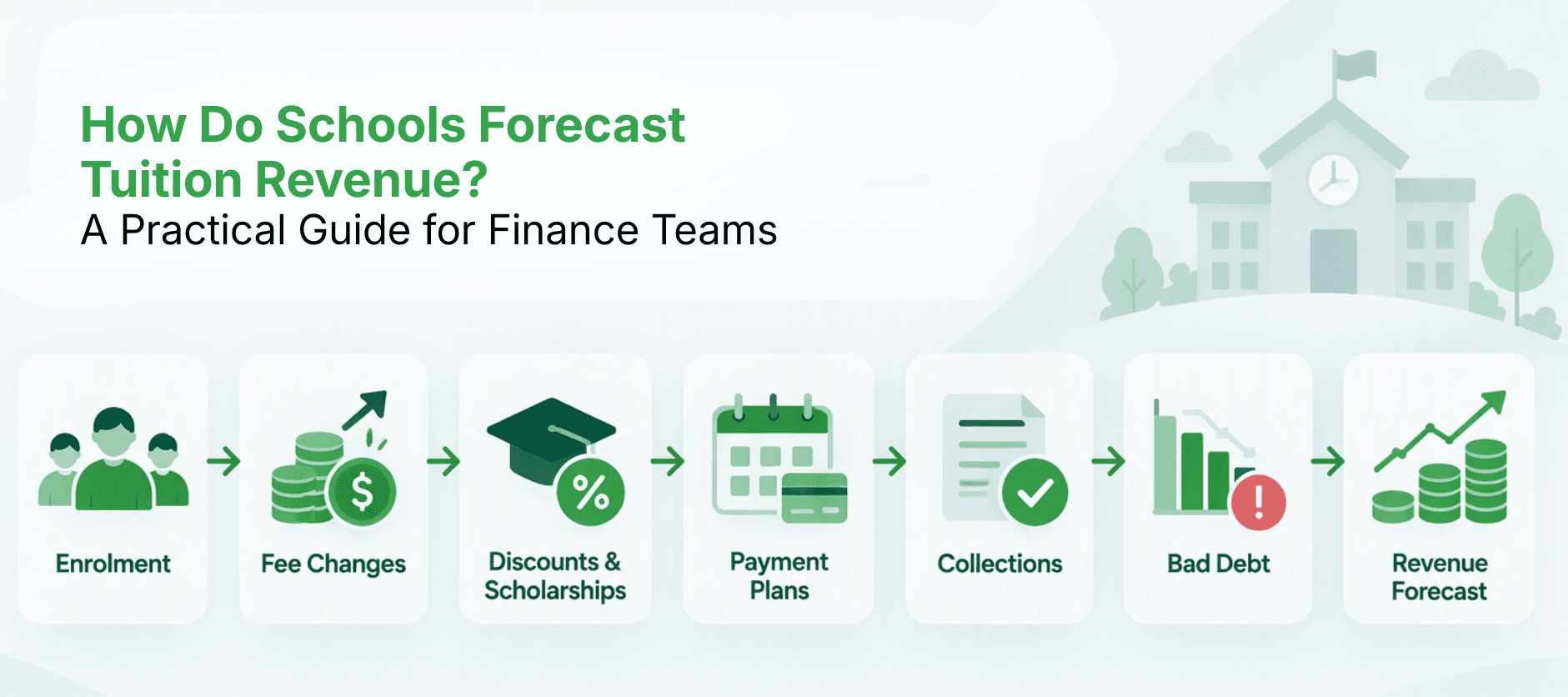
- School BudgetingHow Do Schools Forecast Tuition Revenue? A Practical Guide for Finance Teams
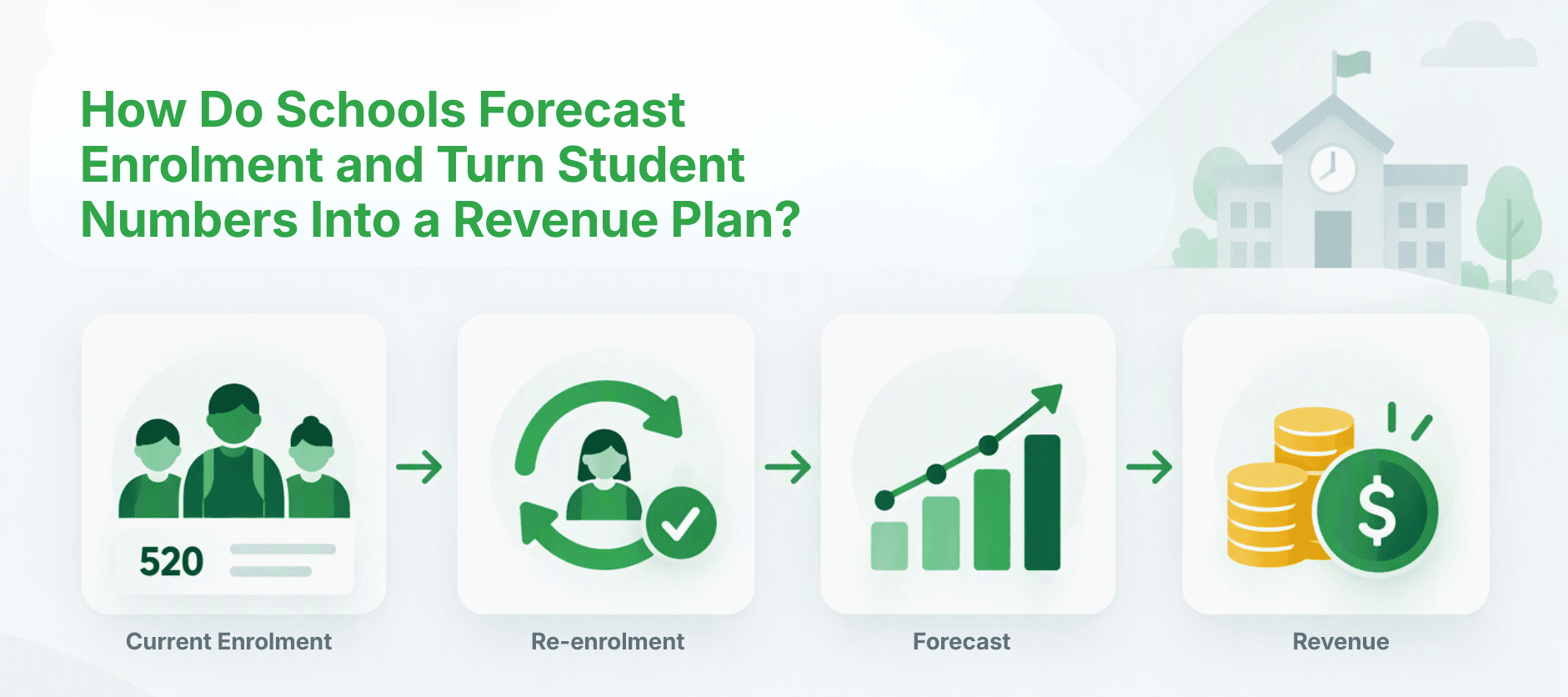
- School BudgetingHow Do Schools Forecast Enrolment and Turn Student Numbers Into a Revenue Plan?
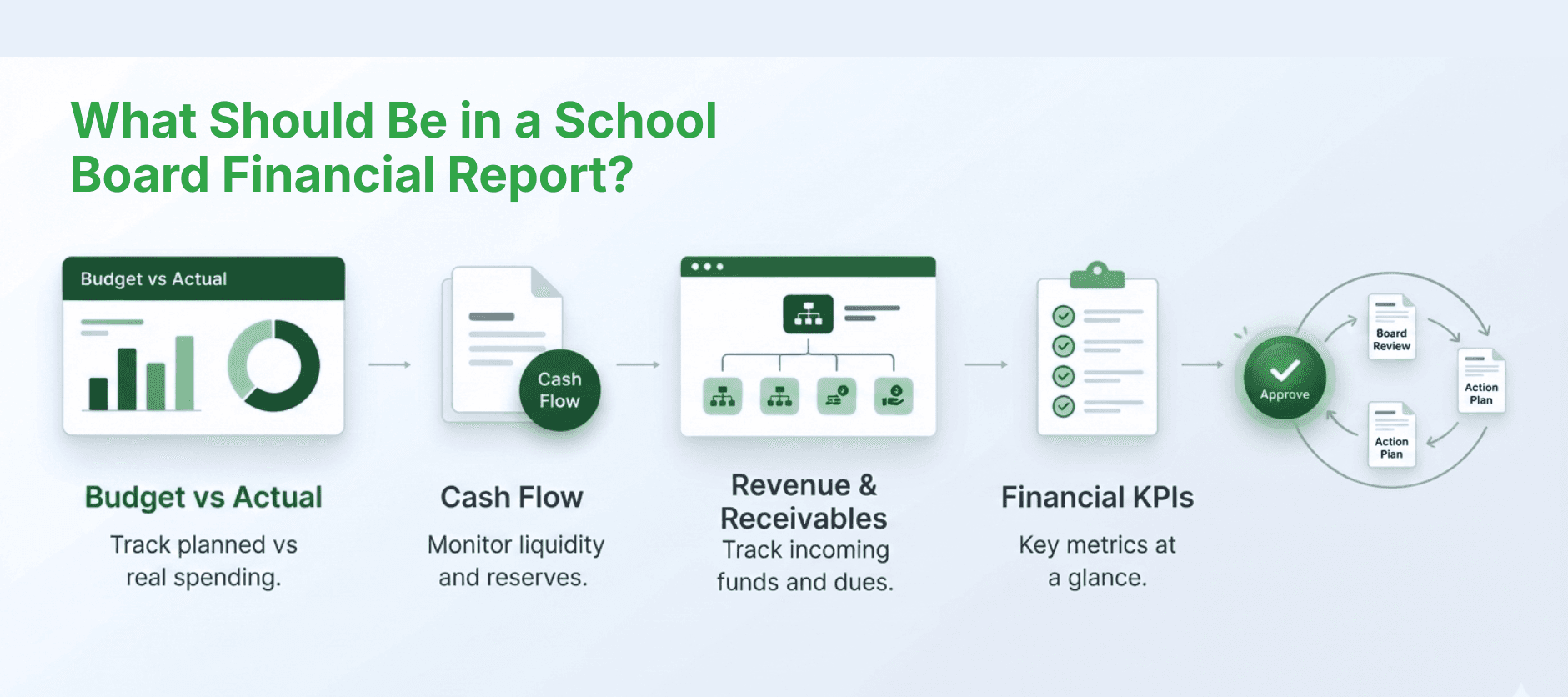
- School BudgetingWhat Should Be in a School Board Financial Report? 7 Reports Finance Teams Should Track
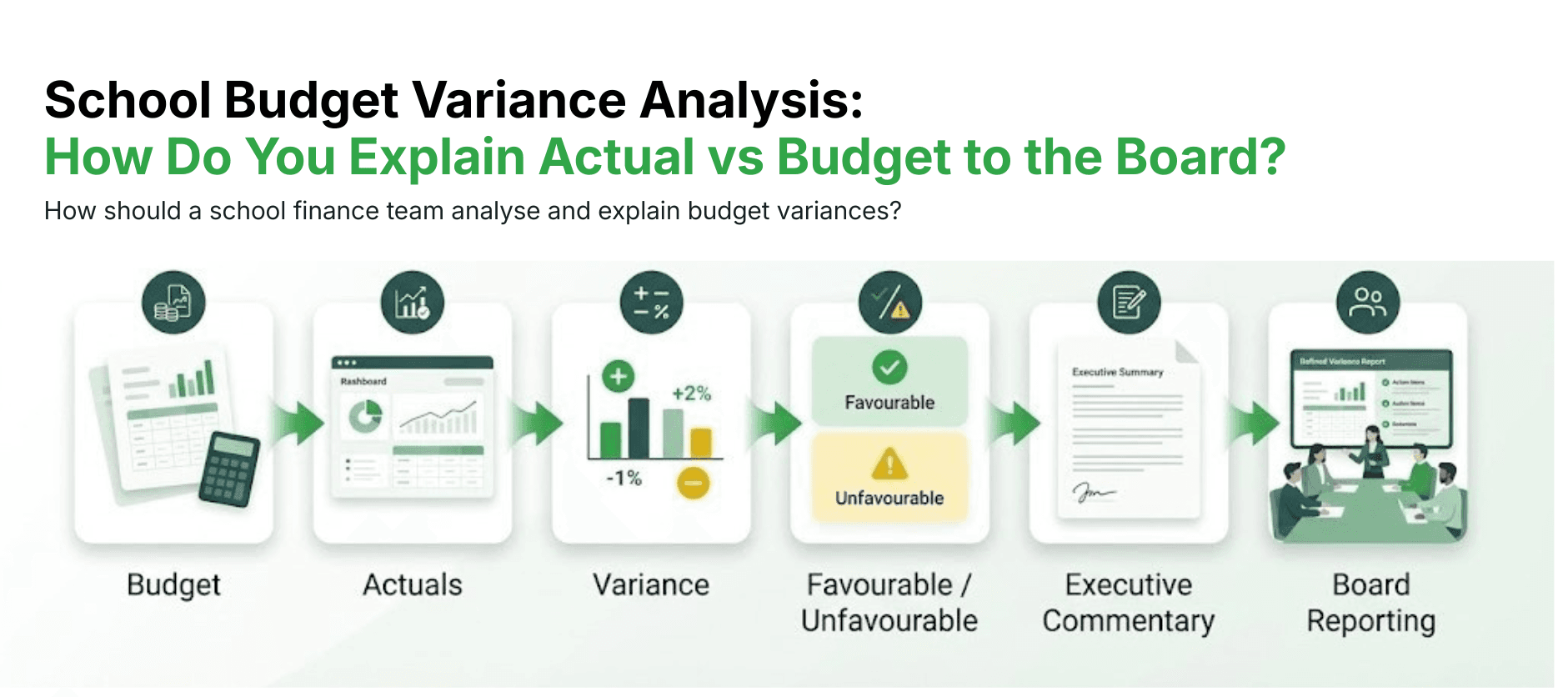
- School BudgetingSchool Budget Variance Analysis: How Do You Explain Actual vs Budget to the Board?
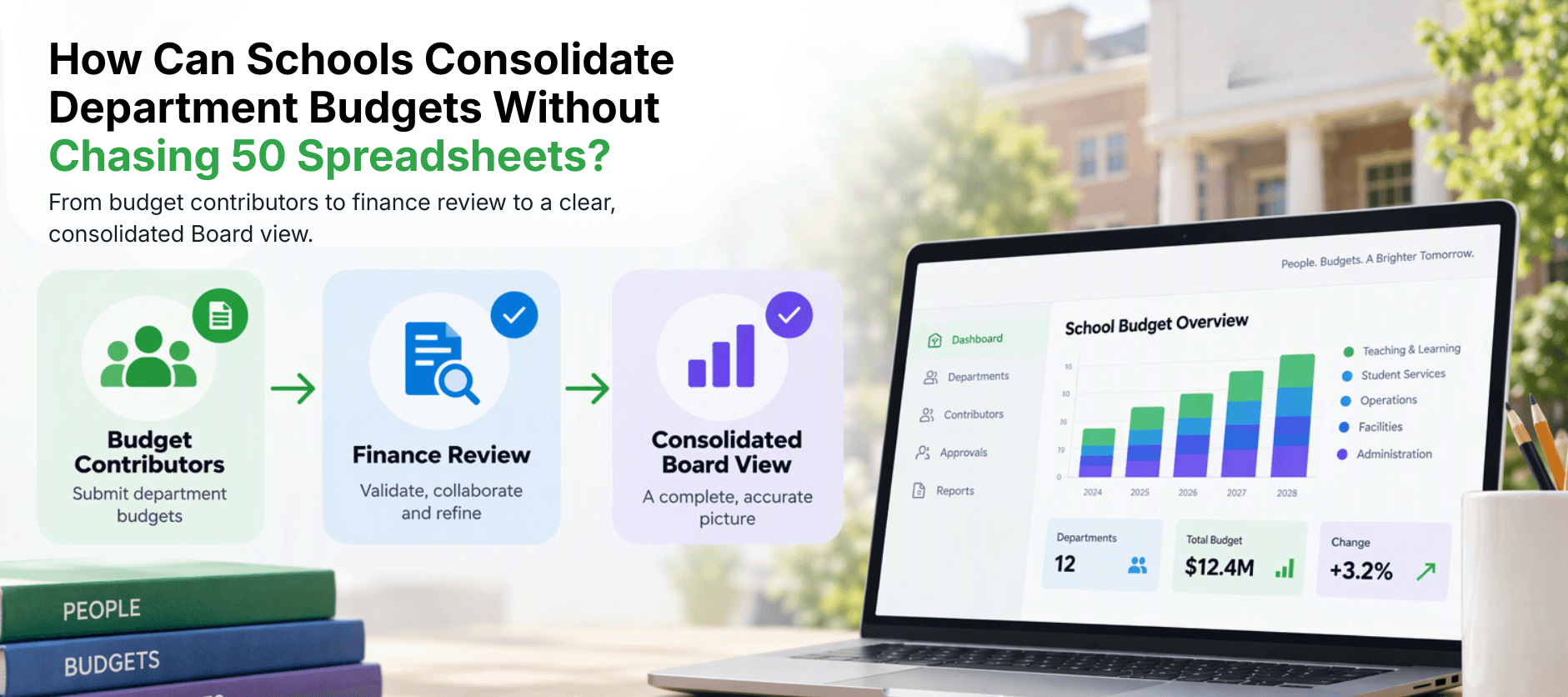
- School BudgetingHow Can Schools Consolidate Department Budgets Without Chasing 50 Spreadsheets?
- School BudgetingSchool Budgeting in Excel: What Works, What Gets Difficult, and When to Change?

- School BudgetingHow Do You Build a School Budget? A Step-by-Step Guide for Finance Teams

- School BudgetingSchool Budget vs Forecast: What's the Difference and When Should You Use Each?