ERP
What Does a School Board Actually Ask Before Approving Next Year's Budget?
A practical set of questions for Board and finance committee members to test a budget before approval, beyond simply reviewing the bottom line.
October 28, 2026
Quick Answer
Before approving a school budget, Boards typically test five things: whether the assumptions are realistic (enrolment, fees and wages), whether the result is sustainable beyond the bottom line, how the budget compares with last year's actual results, what the risks are and how they were tested, and whether the budget supports the school's priorities. The best Board budget questions test how the budget was built, not only what it totals. A budget that arrives with clear assumptions and a tested cautious scenario answers most of them before they are asked.
Key Takeaways
- The bottom line is only the start. Boards test the assumptions behind it.
- The most useful questions cover enrolment, fees, staffing, cash, risk and strategy.
- A budget with documented assumptions and a tested cautious scenario answers most questions before they are asked.
The budget paper arrives the night before the finance committee meets. It runs to thirty pages, and the bottom line shows a modest surplus. A committee member reads it twice and thinks it looks fine, but isn't quite sure what to ask. When the chair says "any questions?", the room goes quiet.
That silence is rarely a lack of interest. Most Board members are volunteers with other careers, and they want to do the job properly without pretending to be accountants. The questions that matter are not technical. They are simple, direct and easy to prepare in advance, and the finance team usually has the answers ready if they know what is coming.
What Does a School Board Actually Ask Before Approving the Budget?
Experienced Boards tend to come back to the same eight questions, which cover those five themes. Each one tests a different part of how the budget was built:
| Area | The Question | Why It Matters |
|---|---|---|
| Enrolment | What enrolment is the budget based on, by year level, and how confident are we? | Student numbers drive fee income and staffing, so a small change here moves everything. |
| Fees | What fee increase does it assume, and what happens to income if enrolment comes in lower? | It shows how sensitive the result is to the biggest income assumptions. |
| Staffing | What is driving the change in staffing cost compared with last year? | Staffing is usually the largest cost, so any change deserves a clear explanation. |
| Comparison | How does the budget compare with last year's actual results, not only last year's budget? | Actual results show what really happened, while last year's budget may have been missed. |
| Result | Is the operating result enough to cover depreciation, capital needs and reserves? | A surplus on paper can still leave the school short of what it needs to invest. |
| Cash | What does cash look like through the year, including the low points? | A budget can balance over the year while cash is tight at certain times. |
| Risk | What happens if the main assumptions are wrong? | It shows whether the school is resilient or relies on everything going to plan. |
| Strategy | Does the budget support the priorities the Board has agreed? | A balanced budget that ignores the strategy is not a good budget. |
Why Should a Board Look Beyond the Bottom Line?
The bottom line is the result of the budget, while the assumptions are the cause. A modest surplus can rest on an optimistic enrolment figure, and a deficit can be a deliberate decision to invest. Looking only at the total can't tell the two apart.
Questions about assumptions are not a criticism of the finance team. They are the way a Board shows that it has understood the budget it is being asked to approve, which is exactly what the role requires.
What Should the Board Ask About Enrolment and Fees?
Fee income is usually the school's largest source of revenue, so it is the first place to test. Ask for enrolment by year level, and for the assumptions behind it: how many current students are expected to return, how many new students are expected, and what that is based on.
Then ask how sensitive the result is. In a simple example, ten fewer students in a senior year group at an annual fee of 18,000 reduces gross tuition by 180,000, before any change to staffing. Also ask what the planned fee increase means for families, and whether discounts and bursaries have been allowed for.
What Should the Board Ask About Staffing and Costs?
Staffing cost depends on enrolment, class numbers and the wage assumption, so ask how all three were set. A new class can add a teacher at a particular enrolment level, so costs move in steps rather than smoothly.
It also helps to ask which increases are one-off and which will recur. A one-off cost is a decision for this year, while a recurring cost becomes part of the base for every year after.
What Should the Board Ask About Cash, Capital and Reserves?
A budget can balance for the year and still leave the school short of cash at certain points, especially around when fees arrive and when large payments fall due. Ask to see the cash position through the year, including the lowest point.
Ask what capital projects are included and how they are funded, and whether the operating result is large enough to cover depreciation and contribute to reserves under the Board's own policy. This is where a modest surplus on paper can turn out to be a real shortfall.
What Should the Board Ask About Risk?
The most useful risk question is simple: what would have to be true for this budget to miss? A good answer names the two or three assumptions that matter most, shows what happens if they come in lower, and says what the school would do about it.
Ask whether a cautious scenario has been tested, such as lower re-enrolment or fewer new students. Also ask what would trigger a reforecast, and when the Board will see one, so that surprises become conversations rather than shocks.
Why Do These Questions Often Come Up Late?
Because the answers can be hard to produce quickly. The assumptions behind a budget often sit in separate workbooks, and answering a question like "what if enrolment is lower?" can mean recalculating revenue, staffing and the result by hand. By the time the paper reaches the Board, there may be little time left for questions.
None of this reflects a lack of skill in the finance team. They are usually doing careful work with the tools they have. The strain comes from the structure, where the assumptions and the results live in different places.
How Can Finance Teams Make These Questions Easier to Answer?
You don't need new tools to get a better conversation. These habits help, and they are the thinking behind the checklist at the end of this post:
- Put the key assumptions on one page: enrolment, fee increase, wage assumption and the main risks, in plain language.
- Show last year's actual results next to the budget: so the comparison is with what really happened.
- Include a cautious scenario: so the Board can see how the result changes if assumptions come in lower.
- Explain material changes in plain language: a short sentence beside each large movement.
- Share the paper early and agree a window for questions: so answers can be prepared before the meeting.
Now Imagine the Version That Works
Imagine a Board paper where the assumptions are live. When a committee member asks what happens if enrolment is lower, the finance team changes one number and shows the effect on revenue, staffing and the result, in the same meeting or the same day. The explanation behind each large movement is already attached to the number.
That's what PULSE, Feoda's planning, budgeting, forecasting and reporting platform built for schools, is designed to support. Assumptions and scenarios sit in one model, so a change flows through, and it works alongside the school's finance system. Existing workbooks can be the starting point, and the finance team stays in charge of the numbers and the story.
The Board's job doesn't change. The difference is that the answers arrive with numbers behind them, so more of the meeting goes into judgement and less into waiting for a recalculation.
Frequently Asked Questions
A Board should look for realistic assumptions on enrolment, fees and wages, a comparison with last year's actual results, a result that covers capital needs and reserves, a clear view of cash through the year, a tested cautious scenario, and alignment with the school's priorities.
Related Articles
- ERPHow Long Does It Typically Take to Implement Oracle NetSuite for a School or University?
- ERPWhat Is a Finance System, and Does a School or University Actually Need One?
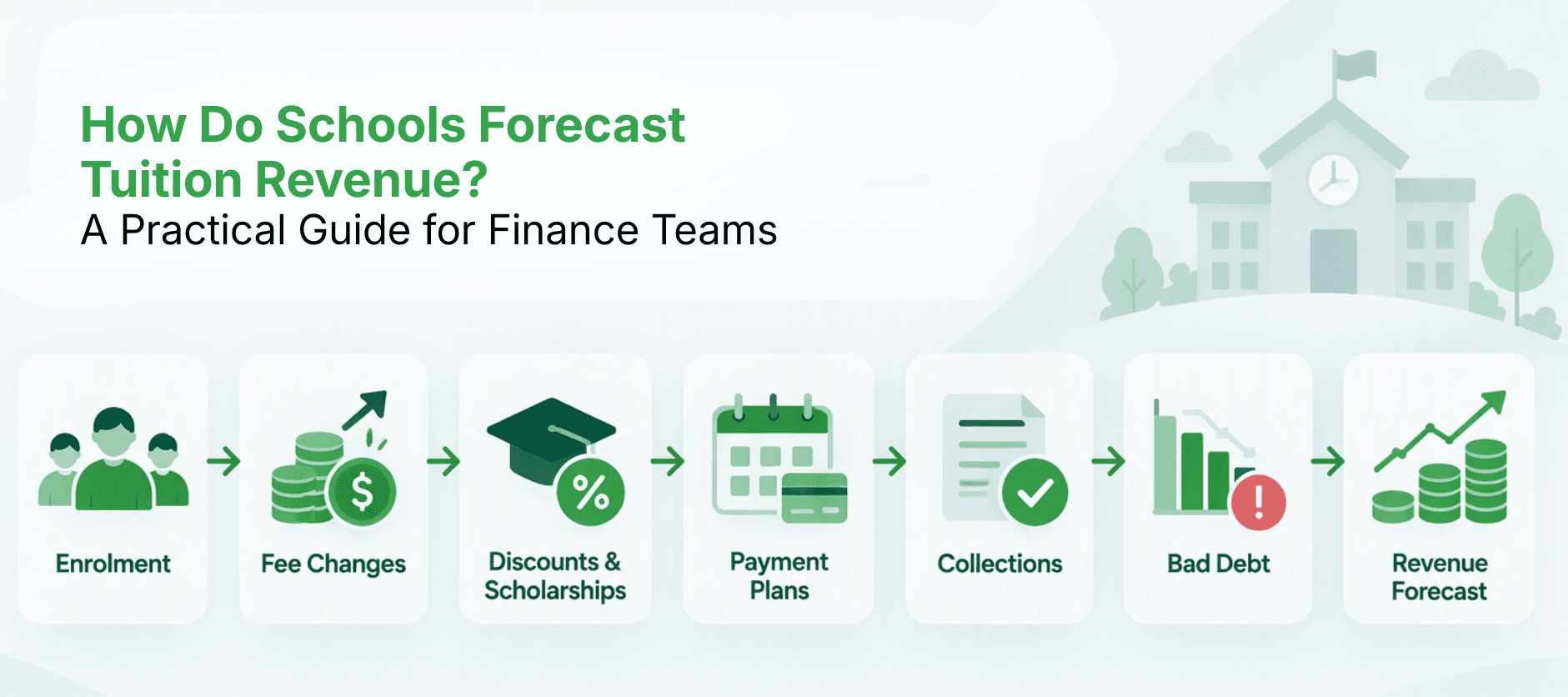
- School BudgetingHow Do Schools Forecast Tuition Revenue? A Practical Guide for Finance Teams
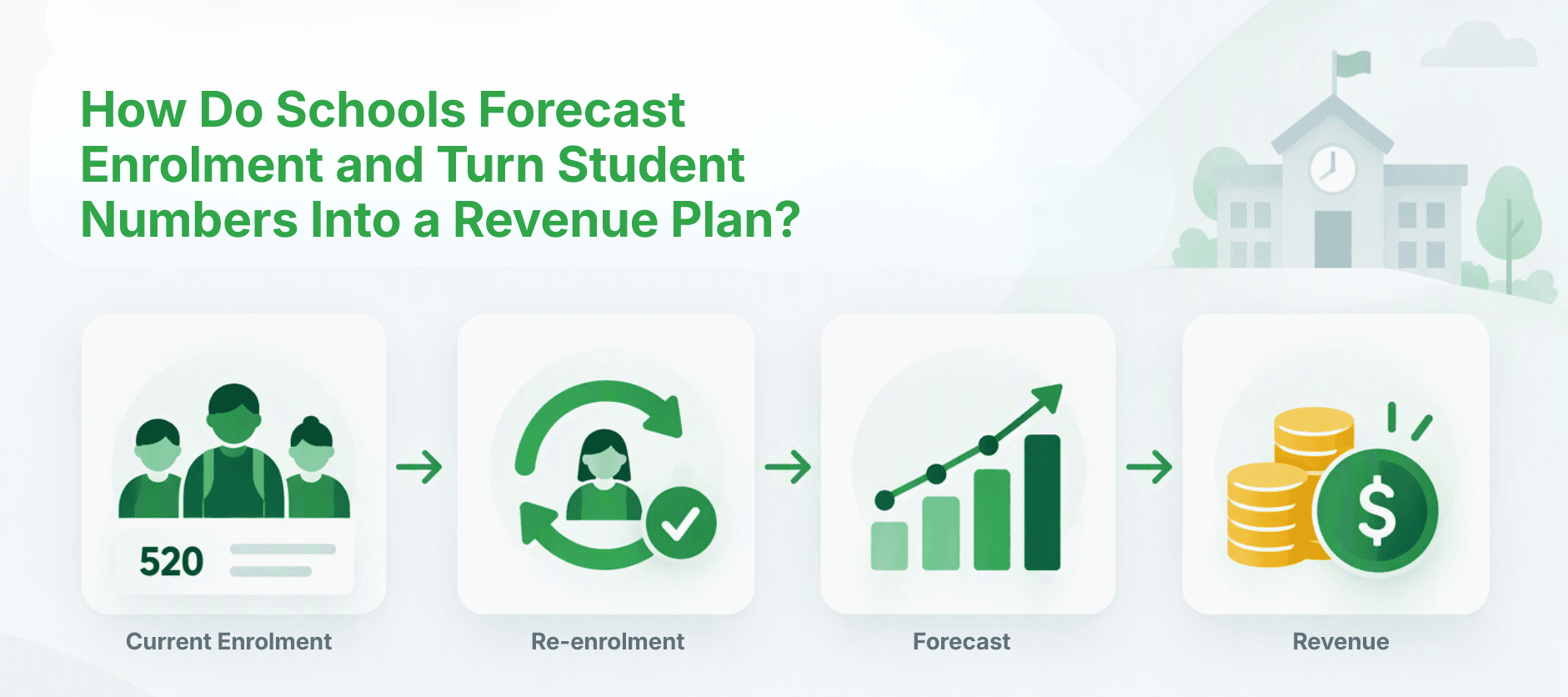
- School BudgetingHow Do Schools Forecast Enrolment and Turn Student Numbers Into a Revenue Plan?
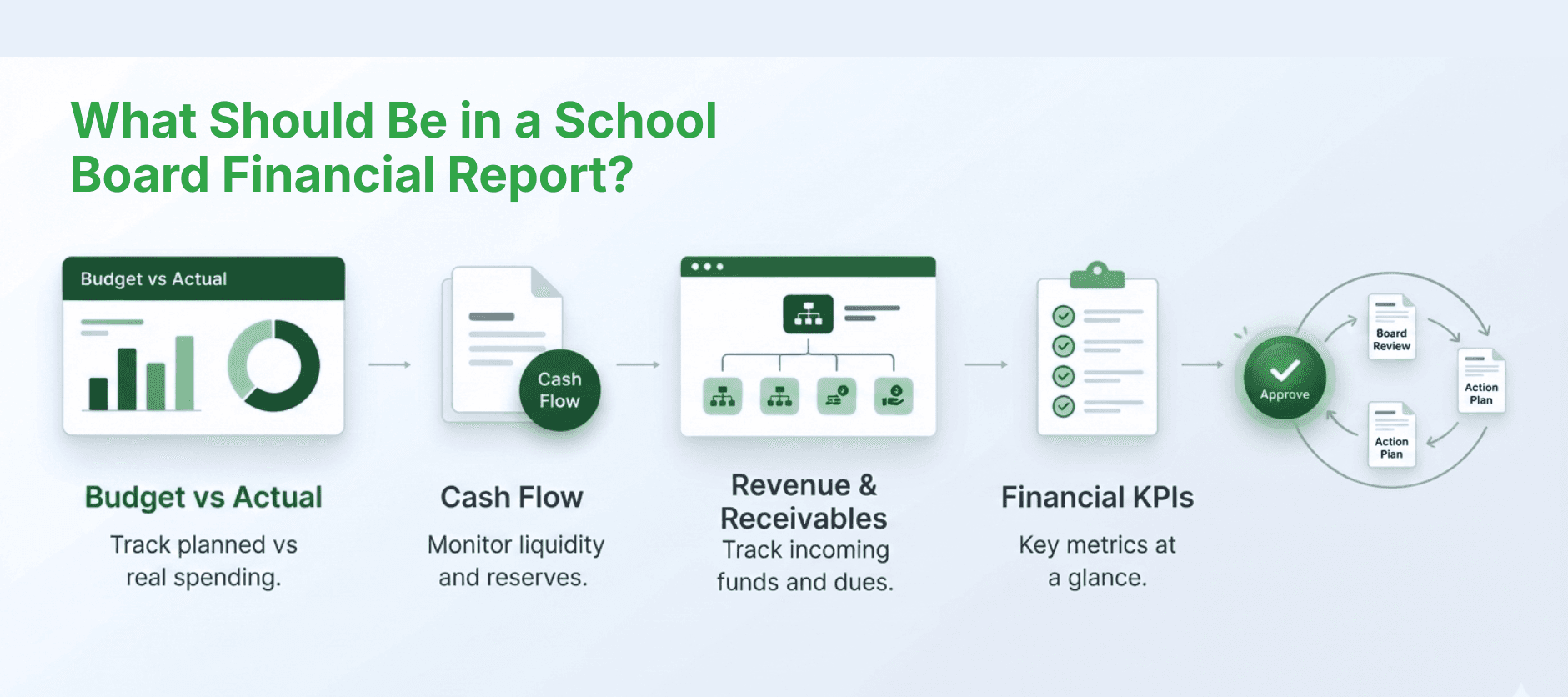
- School BudgetingWhat Should Be in a School Board Financial Report? 7 Reports Finance Teams Should Track
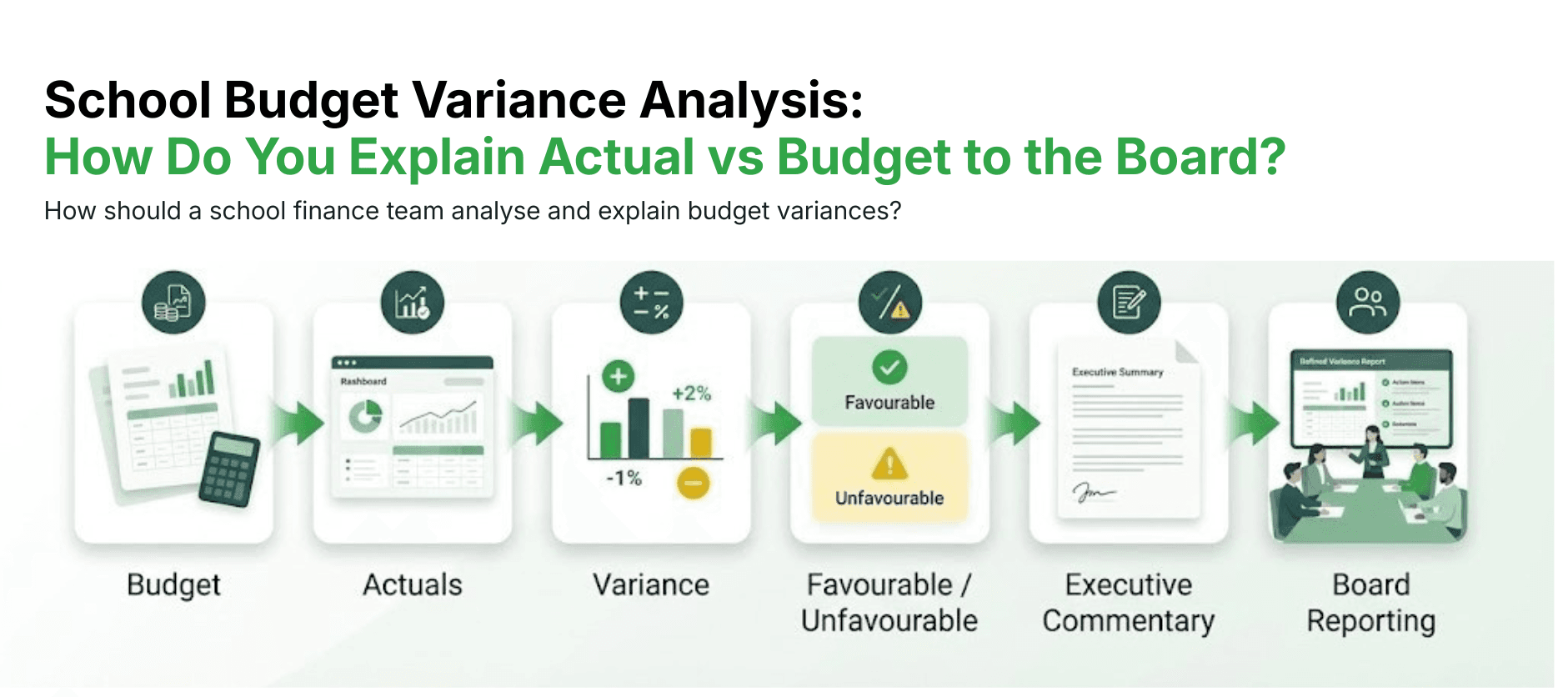
- School BudgetingSchool Budget Variance Analysis: How Do You Explain Actual vs Budget to the Board?
- School BudgetingHow Can Schools Consolidate Department Budgets Without Chasing 50 Spreadsheets?
- School BudgetingSchool Budgeting in Excel: What Works, What Gets Difficult, and When to Change?