
ERP
How Long Does It Typically Take to Implement Oracle NetSuite for a School or University?
A realistic look at the NetSuite implementation timeline in education, what drives it, and how CFOs can plan around a major systems project.
October 26, 2026
Quick Answer
Implementing Oracle NetSuite for a school or university typically takes from a few months for a focused first phase to a year or more for a multi-campus institution with complex fee billing and many integrations. The NetSuite implementation timeline depends less on the software and more on scope, data quality, integrations, the number of entities and campuses, and how much time your team can give the project. The most reliable way to set expectations is to split the work into phases, agree what goes live first, and plan go-live around the academic and financial calendar.
Key Takeaways
- There is no single timeline. Scope, data, integrations and team availability matter more than the software itself.
- A phased go-live usually reduces risk. Many institutions start with core finance, then add receivables and planning.
- Plan around the academic calendar and avoid term starts, fee billing runs, budget season and year end.
A Board member asks the CFO a fair question: how long will the new finance system take, and when will we see the benefit? The CFO has heard three months from one vendor and a year from another. Neither answer is exactly wrong, and neither is much help with planning.
Wanting a straight answer is reasonable, because an implementation competes with budget season, term starts and the audit for the same people's time. This guide breaks down what the timeline actually depends on, so the answer for your institution can be specific instead of a range with a shrug attached.
How Long Does It Typically Take to Implement NetSuite for a School or University?
Implementations are usually described in months, not weeks. A focused first phase covering core finance for a single entity is generally measured in a few months. A multi-campus institution with fee billing, several integrations and a large data migration is more often measured in a year or more.
These are general planning ranges, not promises. The right figure for your institution comes from a scoped plan that names the phases, the owners and the dependencies, which is why the useful question is less how long it takes and more what it depends on.
What Are the Phases of a NetSuite Implementation?
Most implementations in education follow the same sequence, and the time tends to concentrate in a few places:
| Phase | What Happens | Where the Time Tends to Go |
|---|---|---|
| Discovery and scoping | Agree what goes live first, map current processes and confirm requirements. | Reaching agreement on scope and priorities. |
| Design | Define the chart of accounts, entities, approval rules, fee billing logic and reporting. | Decisions on how to structure campuses, funds and reports. |
| Configuration and build | Set up the system to the agreed design. | Usually steady, and depends on how much is customised. |
| Data migration | Clean, map and load opening balances, suppliers, customers and history. | Cleaning the data, which is often bigger than expected. |
| Integrations | Connect the student system, payroll, banking and other tools. | Agreeing formats and testing each connection. |
| Testing and training | Test with real scenarios and train finance staff and budget holders. | Finding time for busy people to test and learn. |
| Go-live and support | Cut over, run the first close and stabilise. | The first close and resolving early issues. |
What Affects the NetSuite Implementation Timeline Most?
Two institutions can buy the same software and have very different timelines. These are the factors that usually make the difference:
- Scope: core finance alone is quicker than core finance plus fee billing, receivables and planning together.
- Entities, campuses and funds: each one adds structure to design, test and report on.
- Data quality and volume: clean, well-organised data moves quickly, while years of inconsistent records do not.
- Integrations: every connection to a student, payroll or banking system adds design and testing time.
- Customisation: the more the system is shaped around existing processes, the more there is to build and test.
- Team availability and decision speed: the people who know the processes are usually the same people running month end.
Why Does the Academic Calendar Matter for Go-Live?
A finance system has to go live at a moment when the institution can absorb it. Term starts, fee billing runs, budget season and year end are all poor times to switch, because the team is already at full stretch and any problem is more visible.
Many institutions aim for a quieter point in the calendar, often the start of a financial period so that a clean set of opening balances is easy to explain. Working backwards from that date is often the best way to build a realistic plan, because it shows how much time is really available for each phase.
Why Do Implementations Run Longer Than Planned?
The common causes are rarely dramatic. The data turns out to need more cleaning than expected. A design decision waits for a meeting that is hard to schedule. The scope grows by a little each month, and the people testing the system are also closing the books.
None of this reflects badly on the team. An implementation sits on top of the day job, and finance teams have little spare capacity to begin with. The timelines that hold up are usually the ones that plan for that reality from the start.
How Can You Protect the Timeline?
You can't remove every risk, but these habits make a measurable difference, and they are the thinking behind the timeline template at the end of this post:
- Agree the first-phase scope in writing: so everyone knows what is in, what is out and what comes later.
- Name an internal project owner with time set aside: a project run on spare moments tends to drift.
- Start data clean-up early: it can happen before any configuration begins.
- Decide who approves design decisions and how fast: waiting for decisions is a common source of delay.
- Plan go-live around the calendar and build in contingency: so one slipped phase does not push go-live into a peak period.
Can You Implement NetSuite in Phases?
Yes, and for education it is often the sensible approach. A common sequence is core finance first, then receivables and fee billing, then budgeting, planning and reporting. Each phase reaches the team with something useful, the first benefit arrives sooner, and the team learns the system before taking on the next piece.
The trade-off is that some temporary connections may be needed between the new system and the tools still in use. That is a cost worth weighing, but it is usually smaller than the risk of changing everything on one day.
Now Imagine the Version That Works
Imagine going to the Board with a plan that shows the phases, the dates, the owners and the date the first benefit will arrive. Go-live is set for a quiet point in the calendar, the data has been cleaned well before it is needed, and the team has been trained on real scenarios. The first close from the new system happens without drama, and the old accounting system is retired after a short parallel period.
That's what Feoda is built to support: a financial information system for educational institutions, built on Oracle NetSuite, with modules for core finance, accounts receivable management, and planning and performance management. Because the pieces are designed to work together, institutions can plan their implementation in phases that match their calendar and their capacity. The finance team stays in charge of the decisions, and the plan stays specific to the institution.
Frequently Asked Questions
It depends on scope, data, integrations and the number of entities and campuses. A focused first phase is commonly measured in months, while a multi-campus institution with fee billing and several integrations is more often measured in a year or more. A scoped plan gives the reliable answer.
Related Articles
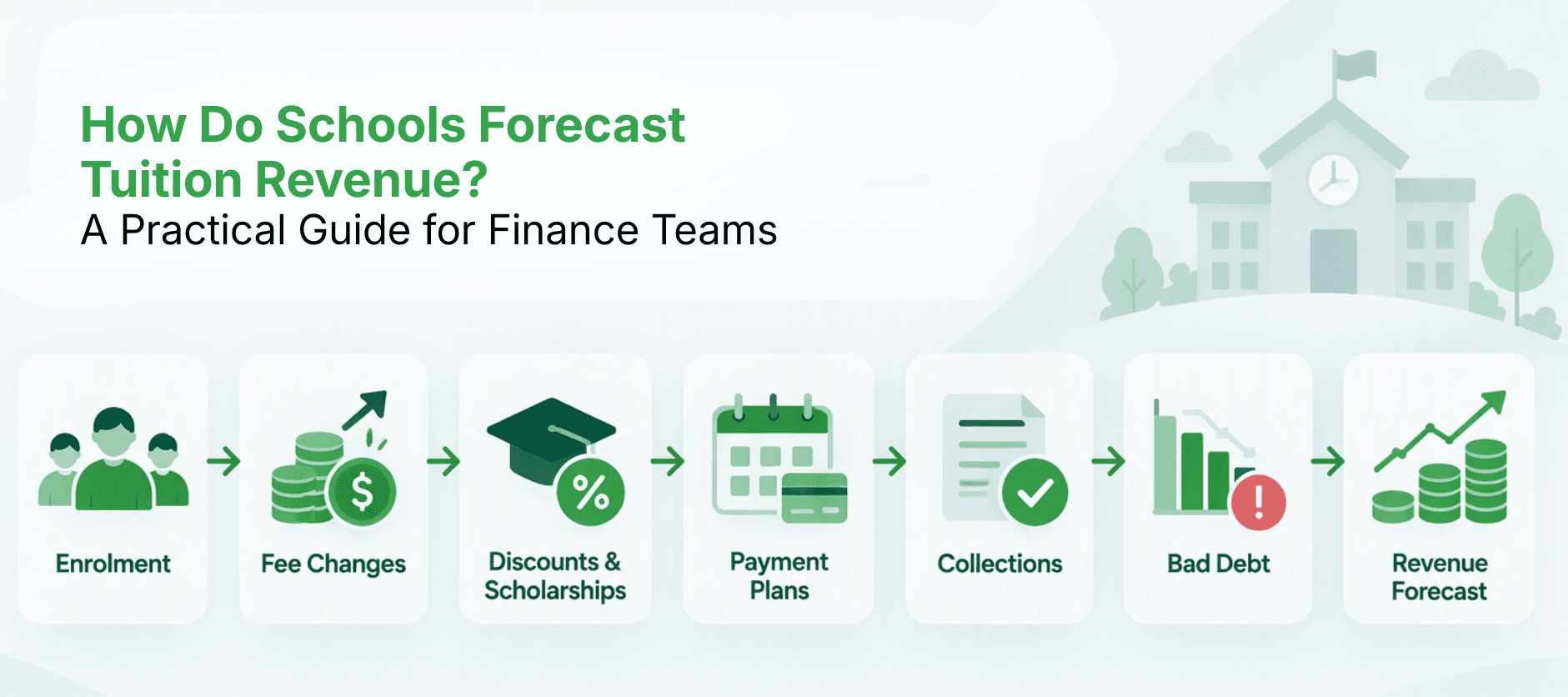
ERPWhat Is a Finance System, and Does a School or University Actually Need One? - School BudgetingHow Do Schools Forecast Tuition Revenue? A Practical Guide for Finance Teams
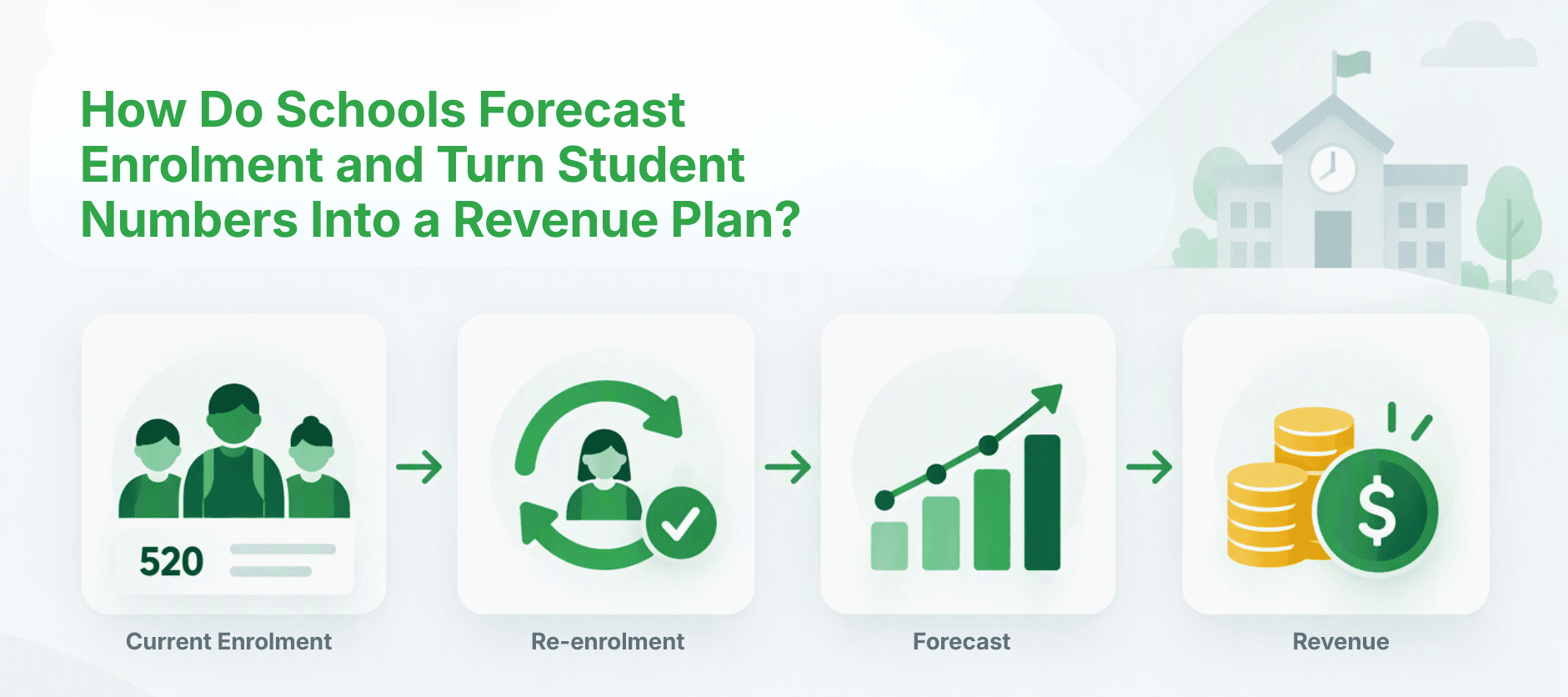
- School BudgetingHow Do Schools Forecast Enrolment and Turn Student Numbers Into a Revenue Plan?
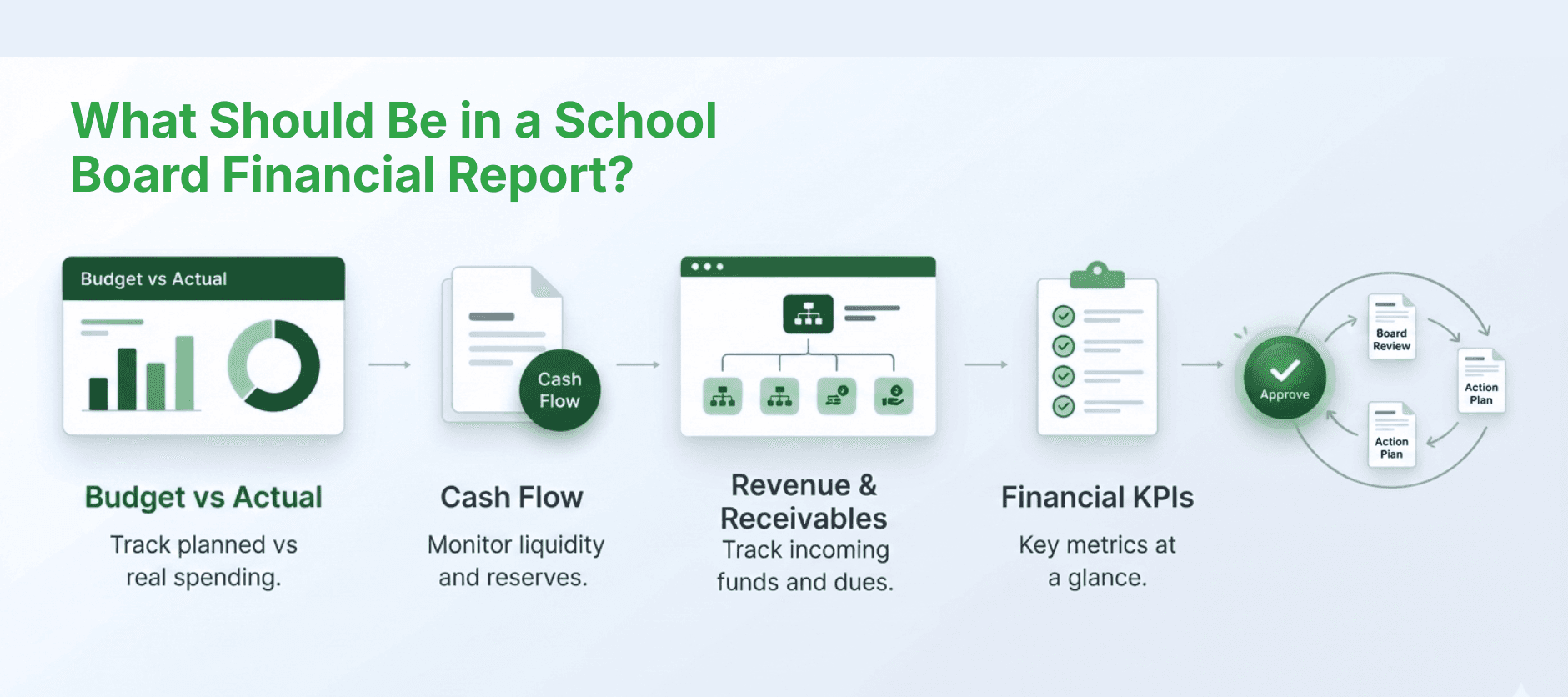
- School BudgetingWhat Should Be in a School Board Financial Report? 7 Reports Finance Teams Should Track
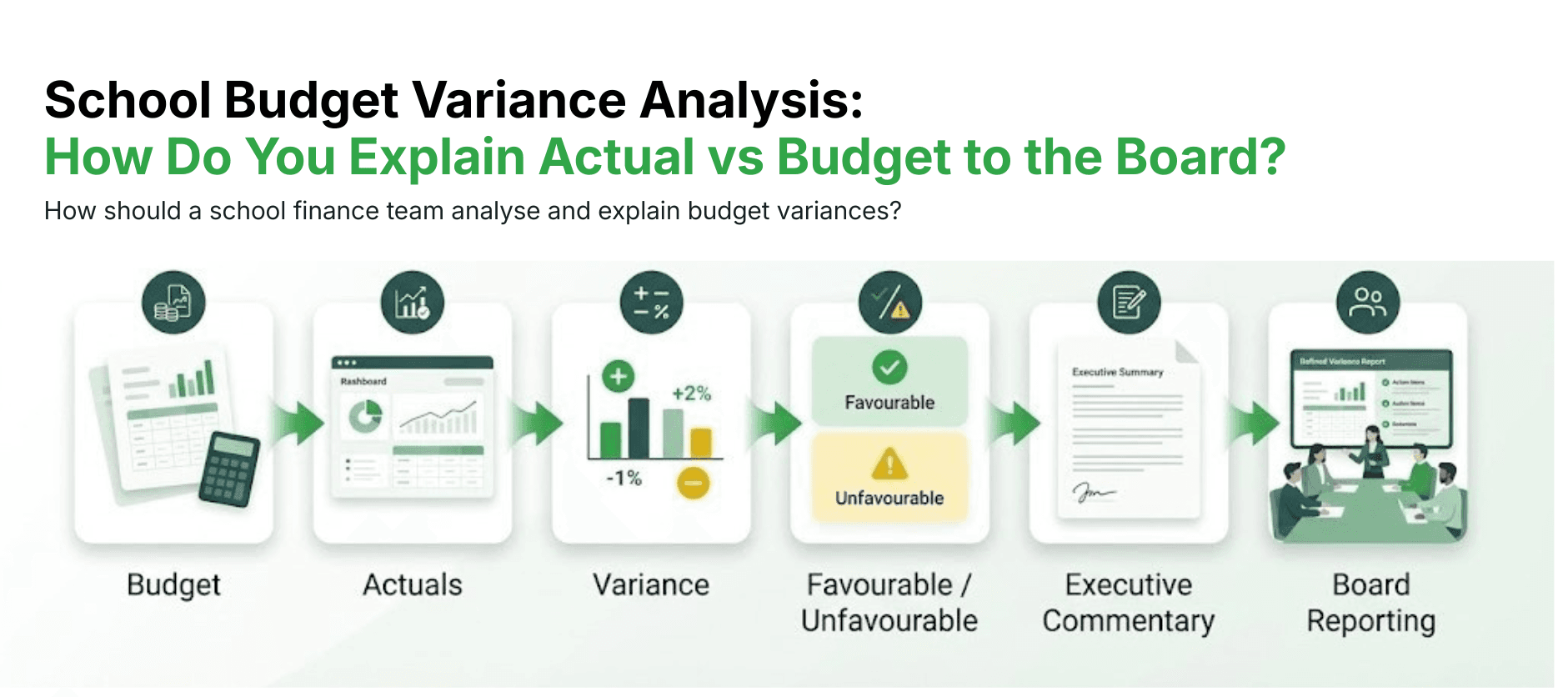
- School BudgetingSchool Budget Variance Analysis: How Do You Explain Actual vs Budget to the Board?
- School BudgetingHow Can Schools Consolidate Department Budgets Without Chasing 50 Spreadsheets?
- School BudgetingSchool Budgeting in Excel: What Works, What Gets Difficult, and When to Change?

- School BudgetingHow Do You Build a School Budget? A Step-by-Step Guide for Finance Teams